Here's What Marketers Are Talking About After POSSIBLE
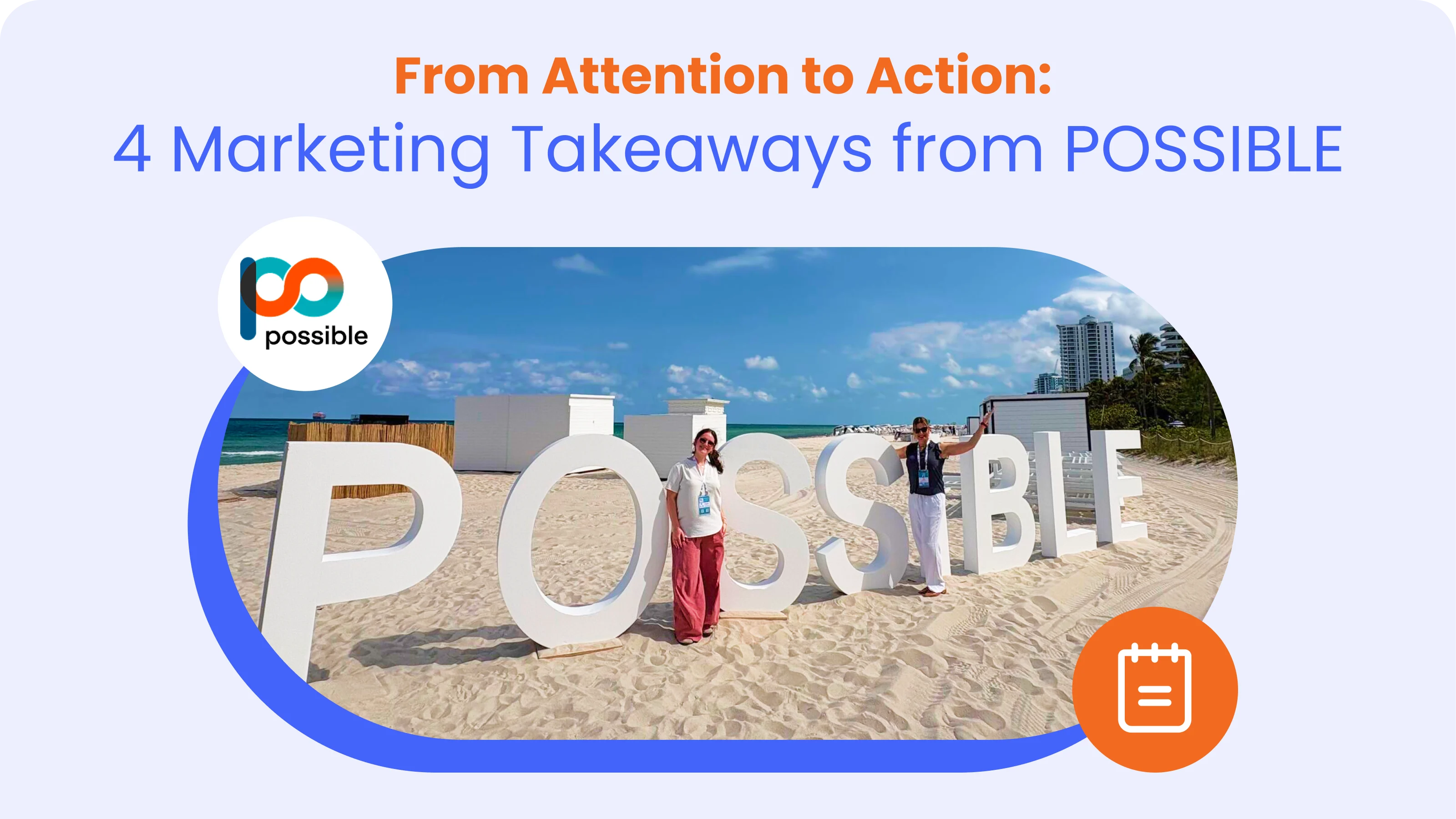
POSSIBLE brought together brand marketers, media leaders, technology partners, and creators to discuss where marketing is headed next. And while the conversations spanned AI, CTV, commerce media, culture, sports, and creativity, one theme kept coming through: attention is only the beginning.
The brands that win will be the ones that turn attention into trust, trust into intent, and intent into action.
Here are four takeaways we’re thinking about after POSSIBLE.
1. Every touchpoint is part of the brand experience
One of the clearest reminders from POSSIBLE: brand perception is built far beyond the ad. Product experiences, service interactions, employee interactions, contracts, content, commerce flows — every touchpoint has the power to either build trust or create friction.
That matters because shoppers are not experiencing brands in neat, linear journeys. They are moving between media, search, social, retailer sites, recipes, reviews, creators, CTV, and mobile screens. Each moment either makes the brand feel more useful or adds one more reason to drop off.
For commerce teams, that means the post-click experience matters as much as the media that drove the click. When a shopper is ready to act, the path forward should feel clear, relevant, and easy.
SmartCommerce takeaway: Brand trust is not only built through messaging. It is reinforced through the experience shoppers have when they try to buy.
2. AI is everywhere but human judgment still matters
AI was one of the most visible themes across POSSIBLE coverage. Leaders discussed AI’s role in speed, personalization, adaptive creative, agentic buying, search, and commerce. The Current reported that Coca-Cola’s CMO pointed to the tension between global scale and micro-level relevance, with AI enabling levels of customization that were not possible a few years ago. The same coverage also noted concerns around AI’s impact on jobs, decision-making, and the need to understand the inputs and outputs behind agentic systems.
But the more interesting theme was not “AI will do everything.” It was more nuanced: AI can help marketers move faster, personalize better, and scale more intelligently, but it does not replace taste, judgment, or brand stewardship.
That is especially important in commerce. Agentic commerce may reshape how shoppers discover products, compare options, and make decisions. But brands still need to make sure the experience after discovery is accurate, available, useful, and connected to purchase.
SmartCommerce takeaway: AI can create more moments of intent. Brands still need the infrastructure to help shoppers act on those moments.
3. CTV is moving from awareness channel to performance channel
CTV came up repeatedly as a channel where brand, creative, and performance are converging. At ADWEEK House, the conversation focused less on surface-level metrics like video completion and viewability, and more on quality, attention, incrementally, creative relevance, and whether every dollar is working harder.
That reflects a broader industry shift. CTV is no longer only a reach vehicle. Marketers are asking harder questions about what happens after exposure: Did the ad drive attention? Did it influence behavior? Did it contribute to incremental sales? Did it connect with the shopper in the right moment?
SmartCommerce takeaway: As CTV becomes more performance-oriented, brands need stronger bridges between inspiration and purchase, especially when the second screen is already in the shopper’s hand.
4. Content, commerce, and culture are blending faster
The lines between content, commerce, and culture are getting harder to separate.
A shopper might discover a product in a recipe, a creator video, a CTV spot, a social post, a search result, or a sports sponsorship. They may not be “shopping” in the traditional sense yet, but they are being influenced, inspired, and moved closer to a decision.
That creates a bigger opportunity for brands, but also a harder challenge. It is not enough to show up across more channels. Brands need to make those moments useful when intent starts to form.
Because the next best action should not feel like a leap. It should feel obvious.
SmartCommerce takeaway: The future of commerce is not one destination. It is a connected set of moments where shoppers discover, decide, and act.
Final thought: The next advantage is reducing the gap between interest and action
The next era of marketing will not be won by attention alone.
Brands are being asked to earn trust, move faster, personalize more intelligently, prove performance, and create experiences that actually help shoppers. That makes the moment after engagement more important than ever.
When a shopper is ready to act, even small points of friction can slow them down: an unavailable product, too many clicks, an unclear next step, a retailer that does not fit their preference, or a purchase path that feels disconnected from the moment that inspired them.
The advantage goes to brands that make action feel easy.
Not by forcing commerce into every experience, but by making the right moments shoppable, useful, and connected.