The Hidden Cost of Ignoring Retail Availability
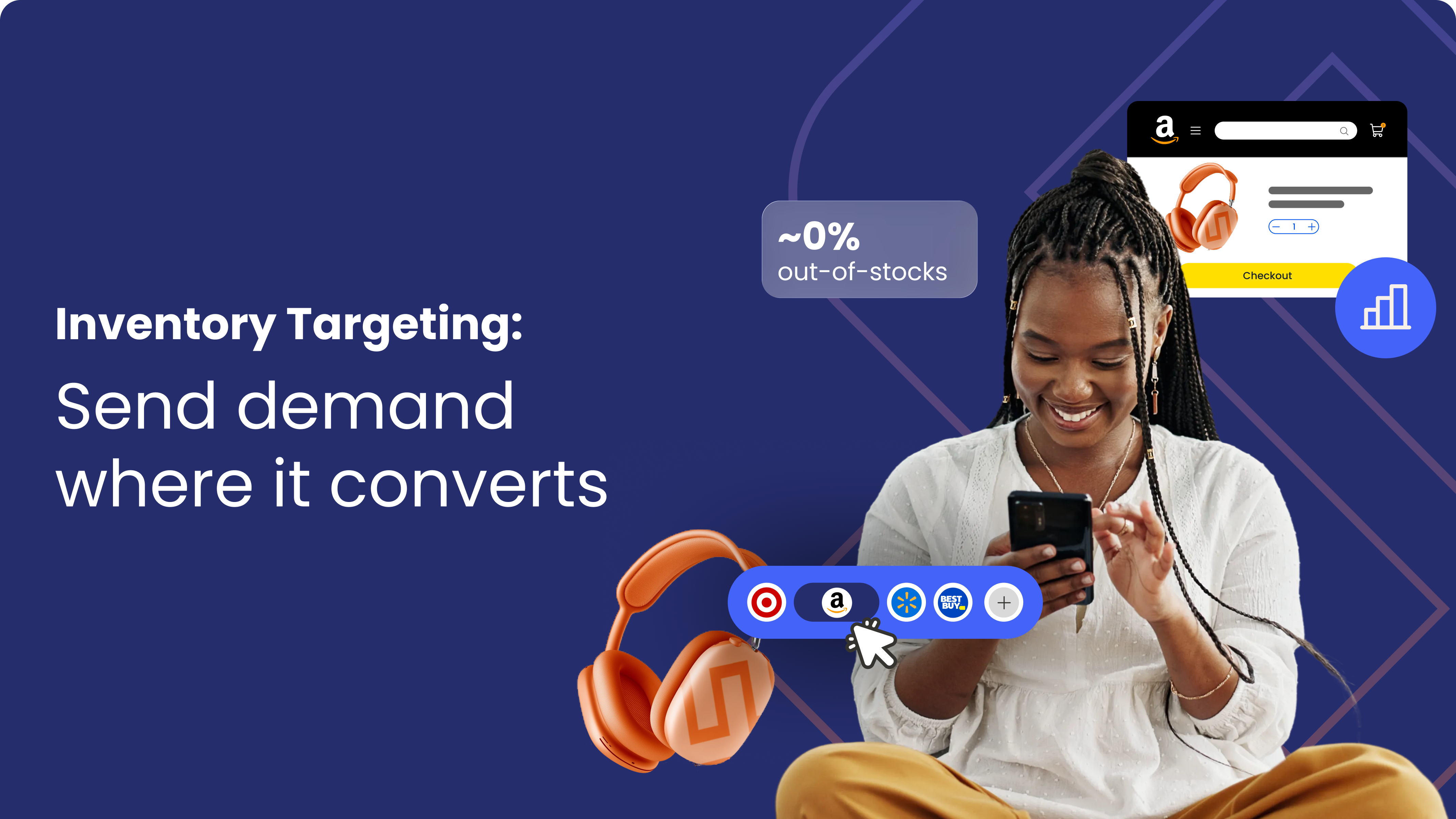
Why the Best Commerce Campaigns Start With Retail Reality
Brands and partners are launching earlier, scaling smarter, and avoiding wasted spend by aligning media with real availability.
Media plans are precise. Retail availability is not.
And yet, many commerce campaigns still launch as if inventory is static, evenly distributed, and perfectly timed.
It isn’t.
Retail conditions change constantly. Products go out of stock. Distribution phases in unevenly. Purchase paths break. When media plans don’t account for that reality, performance erodes – often invisibly.
On average, roughly 27% of campaign clicks land on products that are unavailable at the retailer, meaning a meaningful share of high-intent demand never reaches the cart.
Some industry estimates suggest brands waste $50B+ annually on ads that lead shoppers to dead ends, unavailable products, broken purchase paths, or unnecessary friction at checkout.
This loss doesn’t just affect sales. It compounds wasted media spend and weakens campaign performance from the very start.
The strongest commerce programs today aren’t trying to control retail. They’re learning how to plan with it.
The hidden cost of launching blind
Most brands and partners recognize this pattern:
Campaigns delayed until distribution feels “safe” everywhere
Launches under-scaled because inventory confidence is low
Mid-flight adjustments driven by instinct instead of insight
None of this reflects poor planning. It reflects a lack of clear signals at the moments when decisions matter most.
Retail is dynamic. Media often isn’t.
Retail-first planning isn’t about control – it’s about alignment
Retailers operate in complex, real-world environments:
Regional variance
Phased distribution
Operational constraints
The most effective commerce activations don’t fight that complexity. They design around it.
Inventory Targeting exists to help teams plan and activate media with retail reality in mind – so demand flows where products are actually available, as conditions change.
That means asking smarter questions:
Where is availability strong today?
Where is it emerging?
Where should demand accelerate – and where should it wait?
Inventory Targeting supports these decisions by helping teams align media timing and scale to how retail actually works.
This isn’t about precision for its own sake. It’s about sending demand where it can convert.
Why Inventory Targeting is becoming a best practice
More brands and partners are building Inventory Targeting into their planning workflows – not as a replacement for in-flight optimization, but as a foundation for it.
When teams account for availability earlier, they’re able to:
Launch sooner as distribution phases into market
Plan seasonal and new-product campaigns with greater confidence
Reduce avoidable out-of-stock exposure from day one
In many cases, this approach allows campaigns to begin weeks earlier while maintaining cleaner performance as conditions evolve.
The outcome isn’t just efficiency. It’s alignment across teams, partners, and channels.
Where Inventory Targeting matters most
Inventory-aware planning is especially valuable for:
New product launches Distribution rarely arrives everywhere at once.
Seasonal and time-sensitive campaigns Timing matters more than reach.
Uneven or evolving distribution Regional variation is the norm, not the exception.
Mid-campaign decisions Knowing when to scale, extend, or reallocate spend — based on retail conditions, not instinct.
In each case, teams gain clarity without disrupting retailer operations or the shopper experience.
Why this benefits retailers, too
When demand aligns with availability:
Shoppers encounter fewer dead ends
Carts convert more reliably
Retailers receive cleaner, higher-intent traffic
Inventory Targeting doesn’t create pressure. It reduces friction across the ecosystem.
Designing commerce around how retail actually works
As advertising and commerce continue to converge, the gap between media intent and retail reality is becoming more expensive – and harder to ignore.
At SmartCommerce, we believe performance improves when:
Media reflects retail conditions
Timing matches availability
Demand flows where it can convert
The goal isn’t more data. It’s better decisions at the moments that matter most.
A simple question worth asking
If you’re planning a launch, scaling a campaign, or navigating uneven distribution:
Are you aligning demand with what’s actually available?
If the answer isn’t clear, Inventory Targeting may be the missing piece.
See how brands and partners are using Inventory Targeting to plan earlier, scale smarter, and reduce wasted spend.